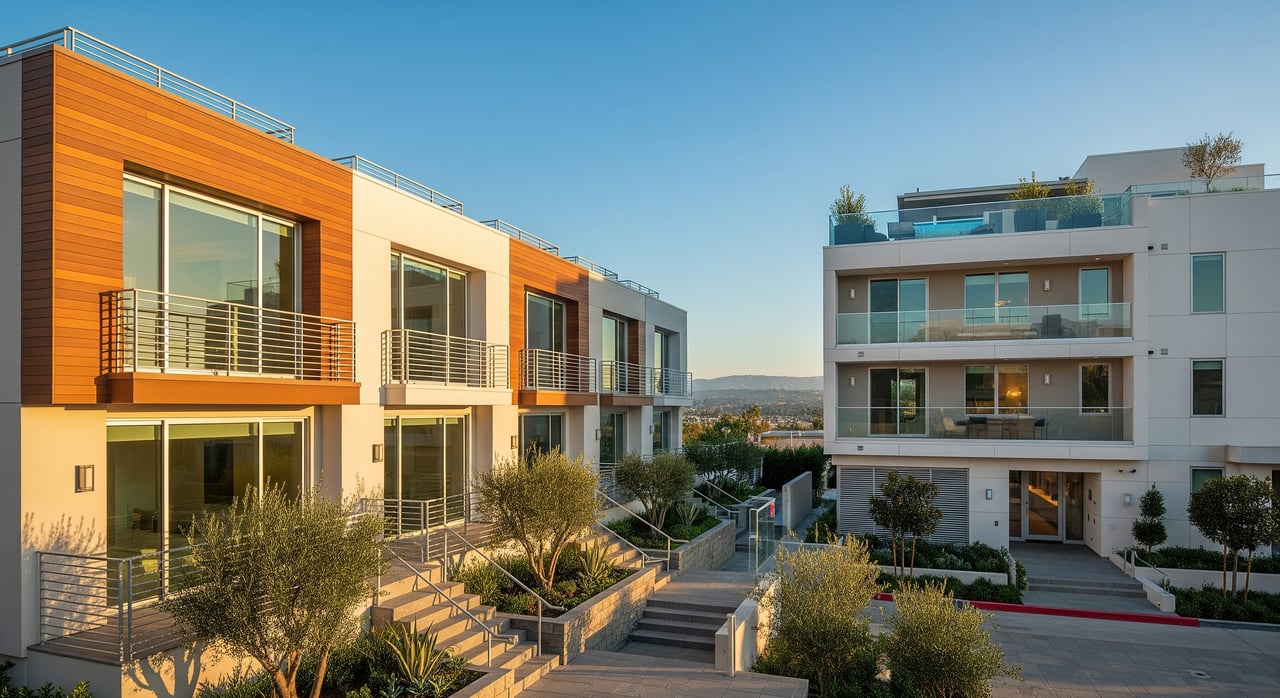
Trying to choose between a condo and a townhome in Burbank? The right choice can change your monthly costs, insurance, loan options, and even how much free time you have after a long day at the studios. You want a home that fits your lifestyle, commute, and budget without surprise headaches. In this guide, you’ll learn the practical differences in ownership, HOA duties, financing, and local rules that matter in Burbank. Let’s dive in.
Condos vs townhomes at a glance
In California, the labels “condo” and “townhome” describe both how a place looks and how it’s legally organized. A condominium usually means you own the interior “airspace” of your unit and share ownership of common areas like the roof, land, and hallways. Rules come from recorded CC&Rs, Bylaws, and HOA policies governed by California’s Davis‑Stirling Common Interest Development Act.
A townhome can be set up in two ways. Some are legally condominiums built in a townhouse style. Others are fee‑simple or PUDs where you own the lot and the structure. That legal difference affects who pays for exterior maintenance, what insurance you need, and which loans you can use.
What you own in a condo
With most condos, you hold title to the inside of your unit and an undivided interest in shared elements. The HOA usually oversees the building exterior, roof, and common systems. You’ll review CC&Rs, Bylaws, the condo plan, budgets, and reserve studies to understand your rights and obligations.
Condo ownership often includes more rules about renovations and use. The tradeoff is less exterior maintenance on your to‑do list.
What you own in a fee‑simple townhome
In a fee‑simple townhome or PUD, you typically own the structure and the land it sits on. You may still share amenities, private roads, or gates through an HOA. Your maintenance responsibilities often include the roof, exterior, and yard space.
Many “townhomes” are legally condos. Always verify the legal form through title documents and the plat or parcel map so you know exactly what you’re buying.
HOA, maintenance, and monthly costs
HOA fees vary widely. Some HOAs cover only landscaping and a gate. Others are full service, covering the building exterior, master insurance, and amenities. Healthy reserve funds help prevent large special assessments. Underfunded reserves or active litigation can raise risk and affect loan options.
What HOA fees usually cover
- Condo HOAs often include exterior maintenance, building insurance, amenities, and sometimes utilities like water or trash.
- Townhome HOAs may charge less if owners handle their own exterior, but they still fund shared items like private roads or gates.
- Always confirm what’s included. Review the budget, reserve study, and recent meeting minutes before you commit.
Who fixes what
- Condo: The HOA typically handles the roof, exterior, foundation, and common systems, as defined in the CC&Rs.
- Fee‑simple townhome: You often handle the roof, exterior, and private yards. The HOA may cover shared landscaping or roads.
- When in doubt, check the CC&Rs and site maps to confirm boundaries and responsibilities.
Insurance and earthquake coverage
Insurance differs by structure:
- Condos: The HOA carries a master policy for the building. You carry an HO‑6 policy for interiors, personal property, liability, and loss of use. Consider loss assessment coverage for your share of special assessments.
- Townhomes (fee simple): You typically carry a dwelling policy (HO‑3 or similar) that covers the structure and interior. The HOA, if any, may still insure shared areas.
- Earthquakes: Standard homeowners and HO‑6 policies do not include earthquakes. In Los Angeles County, ask about master earthquake coverage and price out separate protection. The California Department of Insurance offers consumer guidance on earthquake insurance.
Financing differences that affect your approval
Lenders view condos differently because they evaluate both your finances and the HOA’s project health. Fee‑simple townhomes are often treated like single‑family homes with fewer project‑level checks.
- FHA: FHA loans on condos require project approval or limited/spot review. See HUD’s FHA condominium guidance for how approvals work.
- VA: VA loans on condos also depend on project eligibility. Start with VA Home Loans resources.
- Conventional: Fannie Mae and Freddie Mac have their own project standards. Learn about Fannie Mae condo project eligibility and Freddie Mac condo project requirements.
Common project issues that limit financing include high investor ratios, HOA delinquencies, litigation, underfunded reserves, and heavy commercial space. Non‑warrantable condos may require larger down payments or a different loan type.
If the condo project isn’t approved
You still have options:
- Work with a lender that offers non‑warrantable condo loans, often with higher down payments and rates.
- Consider a fee‑simple townhome if you want fewer project‑level restrictions.
- Verify project status early so you do not lose time in escrow.
Burbank factors to weigh
Burbank’s media corridor draws people with tight schedules and odd hours. You may value secure parking, package reception, or a private garage. Buildings near studios range from mid‑century conversions to newer infill townhomes. Age and construction type can affect insurance, retrofit needs, and financing.
- Planning and zoning: Check use, density, and parking standards with the City of Burbank Planning Division.
- Permits and building safety: For retrofit and code questions, visit the City of Burbank Building Division.
Age, retrofits, and special assessments
Some older multifamily buildings may require seismic or soft‑story retrofits. If a condo HOA expects a major retrofit, you could see new special assessments. Review HOA minutes, reserve studies, and planned project schedules to understand timing and cost.
Leasing and short‑term rental rules
If you plan to rent your place at some point, confirm HOA rental caps and any city restrictions. Short‑term rentals may be limited or prohibited. Your lender may also require a minimum owner‑occupancy percentage.
Resale and investor mix
Warrantability, reserves, and owner‑occupancy rates affect the pool of buyers for your future resale. Projects with heavy investor concentration can have more tenant turnover, which may not fit everyone’s lifestyle.
Buyer checklist: condos vs townhomes
Use this quick checklist to stay organized before you write an offer.
Before you tour
- Confirm whether the property is a condo or fee‑simple townhome in the title description.
- Ask your lender about approval requirements for that type.
- Note parking, storage, and commute priorities based on your schedule.
Before you make an offer
For condos and condo‑style townhomes:
- CC&Rs, Bylaws, Articles
- HOA budget and last two years of financials
- Reserve study and insurance certificate
- Meeting minutes, delinquency report, and any litigation disclosures
- Owner‑occupancy and rental ratio, current or planned special assessments
- Rules on pets, rentals, and parking
For fee‑simple townhomes:
- Plat or parcel map and any property line survey
- Easements and maintenance agreements for shared drives or roads
- Any HOA documents if applicable
Building/complex specifics for both:
- Year built and any seismic or structural retrofits
- Roof history, plumbing or electrical upgrades
- Parking assignment map and guest rules
Questions to ask the HOA, seller, or agent
- Who is responsible for the roof, exterior paint, windows, balconies, and fences?
- What exactly does the HOA fee cover, and are utilities included?
- Any planned projects or assessments in the next 1–5 years?
- Current owner‑occupancy rate and investor ratio?
- Any ongoing or pending litigation?
- Short‑term rental rules and leasing restrictions?
- Deeded, assigned, or first‑come parking? Guest parking policies?
Questions to ask your lender early
- Is this condo project FHA, VA, or conventional warrantable today?
- If not, what down payment and rate are required for a non‑warrantable loan?
- Are there any project‑level issues I should evaluate before I offer?
Which option fits your goals?
- You want a lower down payment and less exterior maintenance: A condo in an FHA‑ or conventionally approved project can be a fit, with an HO‑6 policy and potential loss assessment coverage.
- You want a private garage, patio, and more control over the exterior: A fee‑simple townhome often fits, but budget for roof and exterior upkeep.
- You may relocate or rent out in the future: Verify rental caps, short‑term rules, and owner‑occupancy levels early. These affect both financing and resale.
- You are earthquake‑focused: Ask about master earthquake policies for condos and price out separate coverage. In a townhome, focus on dwelling coverage and any retrofit history.
Ready to compare properties side by side?
If you want clear answers on HOA health, loan options, and the true cost of ownership in Burbank, let’s walk through it together. Reach out to Valerie Gutierrez for a calm, data‑driven plan that fits your commute, budget, and lifestyle.
FAQs
What is the legal difference between a condo and a townhome in California?
- Condos are typically “airspace” ownership within a common interest development governed by the Davis‑Stirling Act, while many townhomes are fee‑simple ownership of the land and structure; always verify with title documents.
How do HOA fees differ for Burbank condos versus townhomes?
- Condo HOAs often include exterior maintenance and master insurance, while fee‑simple townhomes may have lower dues because owners handle roof and exterior; the exact scope depends on the CC&Rs.
Do Burbank condos qualify for FHA or VA loans?
- Only if the condo project meets program standards; check HUD’s FHA condo guidance and VA Home Loans or ask your lender for the project’s current status.
What insurance do I need for a Burbank condo versus a townhome?
- Condo owners usually carry an HO‑6 policy for interiors and personal property, while fee‑simple townhome owners typically carry a dwelling policy covering the structure; earthquake coverage is separate for both.
How do seismic retrofits affect buyers in Burbank?
- Older buildings may need retrofits that lead to special assessments or higher dues; review HOA minutes, reserve studies, and consult the City of Burbank Building Division for program details.
Are short‑term rentals allowed in Burbank condos or townhomes?
- Many HOAs restrict short‑term rentals and the city may have rules; confirm HOA policies and check with the City of Burbank Planning Division before you buy.