Buying an investment property in Granada Hills can look simple at first glance. It is a stable San Fernando Valley neighborhood with strong owner occupancy, established housing, and good regional access. But if you want a deal that truly works, you need to look past the list price and study rent rules, taxes, property condition, and local overlays before you write an offer. Let’s dive in.
Why Granada Hills draws investors
Granada Hills is a low-density neighborhood in the City of Los Angeles with access to the 118, 405, and I-5 freeways. It also has an established business district along Chatsworth Street, which supports its role as a long-standing residential submarket rather than a purely pass-through commuter area.
For buyers, that matters because stable neighborhoods often support a more predictable long-term hold strategy. Granada Hills is not a dense multifamily district, so the investment story here is usually about durability, livability, and steady rental appeal instead of fast turnover.
What the local housing mix tells you
The city planning demographic profile shows 63,446 residents and 22,339 dwelling units in Granada Hills. It also shows 69.7% owner occupancy, 30.3% renter occupancy, and a 3.5% vacancy rate.
That owner-heavy mix suggests a neighborhood where rental demand exists, but it is not the only force shaping values. In practical terms, many investors focus on homes that fit long-term tenants or owner-occupant-plus-rental-unit strategies rather than purely high-density income plays.
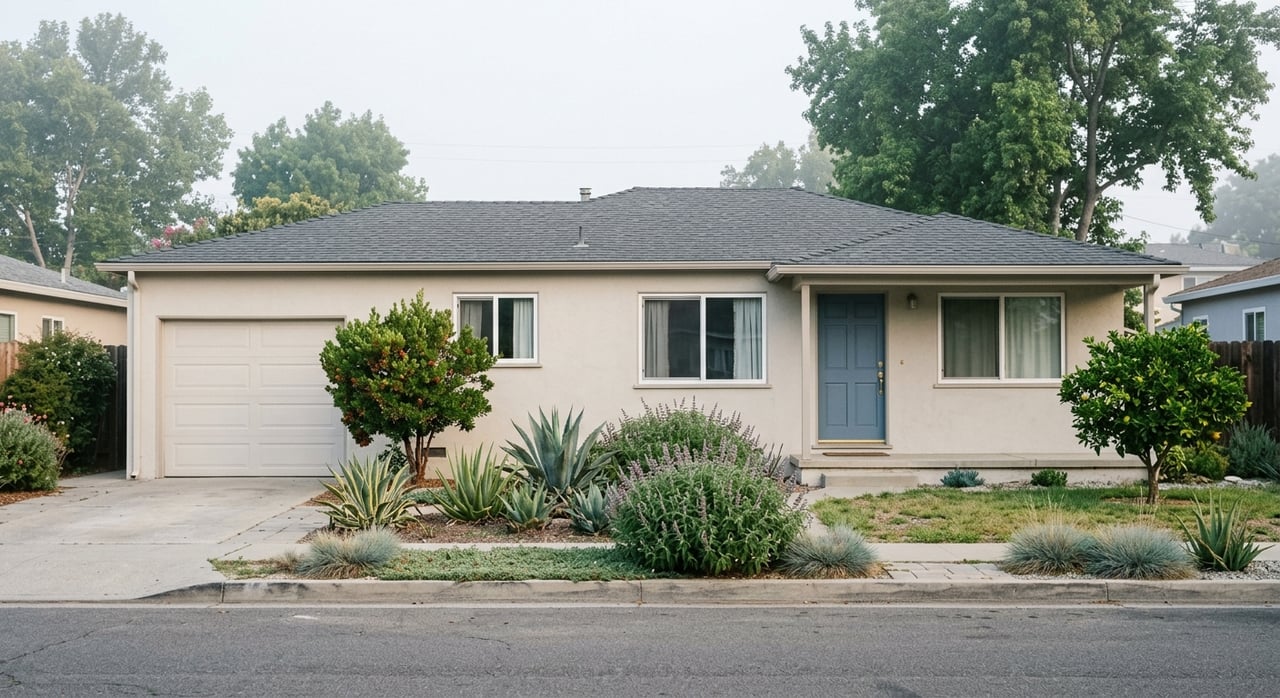
Another important data point is the housing stock itself. About 78.0% of the area is single-housing units, and many homes were built between the 1950s and 1970s. That means you may find established properties with strong use potential, but you should also budget for aging roofs, plumbing, electrical systems, HVAC, and other capital expenses.
Best property types for Granada Hills buyers
In Granada Hills, the most relevant investment options are often:
- Detached homes
- Duplexes
- Townhomes
- Condos
- Homes with secondary units
These property types line up with the neighborhood’s housing mix and rental profile. Since Granada Hills is largely low-density and owner-occupied, larger floor plans, garages, yards, and flexible living arrangements often fit the market better than a strategy built around heavy apartment repositioning.
Detached homes and duplexes
Detached homes and duplexes can make sense for buyers focused on long-term rental demand. The neighborhood’s suburban character and family-household presence often support interest in practical layouts, outdoor space, and storage.
Duplexes may also offer more than one path to returns. Depending on the property, you may be evaluating current rental income, future rent potential, or a live-in-one-rent-the-other setup.
Condos, townhomes, and homes with extra units
Condos and townhomes can offer a lower entry point than detached homes, but your numbers need to include HOA dues and any special assessments. Those costs can materially affect monthly cash flow.
Homes with ADUs, JADUs, or other secondary units deserve extra attention in Los Angeles because rent rules can apply in ways buyers do not always expect. You want to verify exactly what exists on the property, whether it is permitted, and how local rent regulation affects the unit or units.
Rental demand in Granada Hills
Granada Hills rental demand is supported by access, neighborhood stability, and an established residential setting. Because the area is crossed by major freeways and remains largely low density, it tends to appeal more to long-term renters than to a dense pool of short-term or highly transient tenants.
That does not mean every property will perform the same way. It means your best opportunities may be the ones that match how people actually use housing in this area, such as larger homes, properties with yards, and layouts that work well for longer stays.
The biggest underwriting issues to watch
A promising property can become a weak investment if you overlook the local rules and ownership costs that affect returns. In Granada Hills, conservative underwriting is especially important because regulation, taxes, and older housing stock can all shift your numbers.
Check property taxes the right way
In Los Angeles County, property taxes are not simply a flat 1% in practice. The county explains that the tax bill includes the general 1% levy plus debt service and direct assessments.
You also need to plan for timing. The annual secured tax bill is mailed by November 1 and paid in two installments, and a change in ownership or new construction may trigger supplemental tax bills. If you ignore that in your first-year cash flow model, your returns can look better on paper than they do in real life.
Understand transfer taxes before you buy
For a buy-and-hold investor, sale-side costs still matter because they affect your eventual exit. In the City of Los Angeles, the base real property transfer tax is 0.45%, and the county documentary transfer tax is $1.10 per $1,000 of value.
Measure ULA can also apply to higher-value transactions, with thresholds adjusted annually. Even if you plan to hold for years, it is smart to build likely exit costs into your investment model now rather than deal with a surprise later.
Verify rent regulation status early
One of the most important steps in Granada Hills is confirming whether a property falls under the Los Angeles Rent Stabilization Ordinance. According to LAHD, the RSO generally applies to rental properties first built on or before October 1, 1978, including apartments, condos, townhomes, duplexes, two or more single-family dwellings on the same parcel, attached residential units, ADUs, and JADUs.
If a property is covered, the owner must register units, maintain the rent registry, and follow annual rent increase and eviction rules. Even if a property is not covered by the RSO, the city’s Just Cause Ordinance may still apply, so buyers should not assume fewer rules simply because a property looks like a typical house.
Factor in California tenant protections
State law adds another layer to your analysis. The California Tenant Protection Act limits many annual rent increases to 5% plus CPI or 10%, whichever is lower, and it requires just cause for eviction after the applicable occupancy period.
Some single-family homes and condos may be exempt if specific ownership and notice conditions are met. Still, in the City of Los Angeles, you should verify the exact status of the property instead of assuming a single-family purchase is automatically outside tenant protection rules.
Why local overlays matter
Granada Hills includes planning overlays that can affect your renovation or expansion plans. The Granada Hills Specific Plan is active, and the Balboa Highlands Historic Preservation Overlay Zone can add another layer of review for certain properties.
This does not mean you should avoid these homes. It means parcel-level due diligence matters if your investment plan depends on remodeling, additions, or redevelopment.
Historic district considerations
Balboa Highlands is notable for its mid-century housing and historic district status. It includes one of only three Eichler tracts in Southern California and the only Eichler development in Los Angeles County.
If you are buying with a value-add strategy, those details matter. A property may still be a great fit, but your timeline, design choices, and approval path may be different than you first expect.
Long-term rentals versus short-term rentals
In Granada Hills, long-term rental underwriting and short-term rental underwriting should be treated as two separate plans. Long-term rentals align more naturally with the neighborhood’s low-density, owner-heavy profile.
Short-term rental use in Los Angeles comes with its own compliance framework. The city says home-sharing hosts must register, collect and remit transient occupancy tax, renew annually, and follow the city’s primary-residence-based rules before accepting reservations.
That means short-term rental use is not just a pricing decision. It is a legal and operational decision, and you should underwrite it separately from a traditional lease strategy.
A smart due diligence checklist
Before you commit to an investment property in Granada Hills, make sure you verify the basics that most affect returns:
- Rent regulation status
- Legal rent and current lease terms
- Registration history, if applicable
- Supplemental tax exposure after closing
- HOA dues or special assessments
- Property condition and likely capital expenditures
- Whether planned improvements trigger specific plan review
- Whether the parcel is affected by a historic preservation overlay
A clean-looking listing does not replace this work. In an older, regulated market, the strongest deals are usually the ones where current income, future repairs, and exit costs all make sense together.
What makes a strong Granada Hills investment
Granada Hills is best understood as a stable, suburban, owner-heavy Valley market with real rental depth. It is usually not the place where investors chase a high-turnover multifamily story.
Instead, many of the more durable opportunities come from well-located detached homes, duplexes, and owner-occupant-plus-secondary-unit setups that support a long-term hold. If you buy with realistic numbers, clear compliance research, and a property that matches the neighborhood, you put yourself in a much stronger position.
If you are comparing opportunities in Granada Hills and want practical help evaluating the numbers, property fit, and local risks, connect with Valerie Gutierrez for personalized guidance.
FAQs
What types of investment properties make the most sense in Granada Hills?
- Detached homes, duplexes, townhomes, condos, and homes with secondary units are often the most relevant options because Granada Hills is largely made up of single-housing-unit properties.
What should buyers know about rent control in Granada Hills?
- Buyers should verify whether the property is covered by the Los Angeles Rent Stabilization Ordinance, because older properties and several property types, including duplexes and some ADUs, may be subject to city rent rules.
How do property taxes work for Granada Hills investment properties?
- Los Angeles County property taxes include more than the general 1% levy in practice, and buyers should also plan for possible supplemental tax bills after a change in ownership or new construction.
Are short-term rentals easy to operate in Granada Hills?
- Short-term rentals require separate underwriting because Los Angeles home-sharing rules require registration, tax compliance, annual renewal, and adherence to primary-residence-based rules.
Why do planning overlays matter for Granada Hills investors?
- The Granada Hills Specific Plan and the Balboa Highlands Historic Preservation Overlay Zone can affect remodeling, additions, and redevelopment plans, so parcel-level review is an important part of due diligence.